
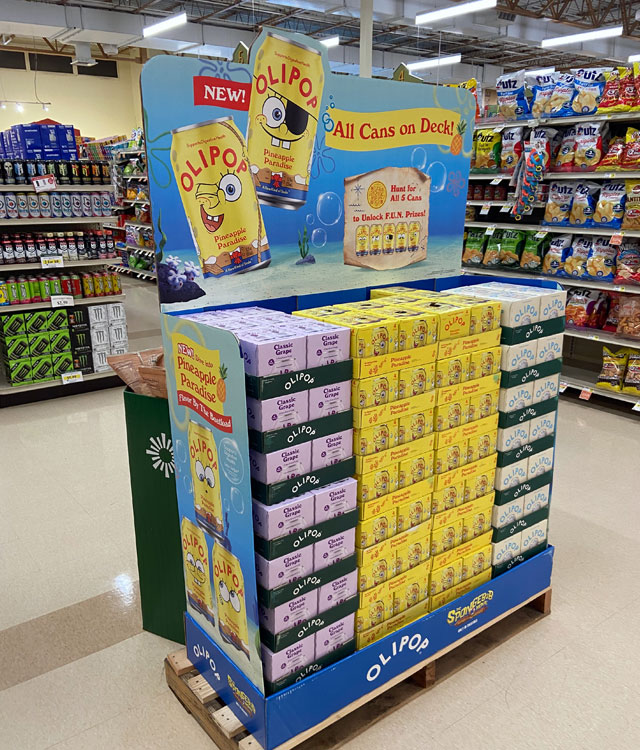
When brands start planning a custom cardboard display, one of the first questions they ask is:
“How much will it cost?”
The honest answer is: it depends.
Unlike standard packaging, every cardboard retail display is custom engineered around your product, your retailer, and your merchandising goals. Two displays may look similar, but their production costs can vary significantly depending on their structure, materials, and manufacturing requirements.
Understanding the major cost drivers before requesting a quotation will help you plan your budget, avoid unnecessary expenses, and make better design decisions.
1. What Information Do Manufacturers Need to Calculate Display Costs?
A professional manufacturer cannot provide an accurate quotation based on a photo alone. The more project information you provide, the more accurate the pricing will be.
Typically, manufacturers will ask for:
Product dimensions and weight
Number of SKUs
Quantity of products per display
Preferred display type (floor display, counter display, pallet display, dump bin, sidekick, etc.)
Target retailer (Costco, Walmart, Sam’s Club, Target, CVS, Home Depot, etc.)
Estimated production quantity
Shipping destination
Expected delivery schedule
Existing packaging or product samples
Reference photos or sketches
This information helps engineers determine the most suitable display structure, material specifications, printing process, and shipping method.
Without these details, any quotation is only an estimate.
2. Which Structural Design Decisions Have the Biggest Impact on Cost?
The structure of a cardboard display often has a greater influence on cost than its appearance.
Several engineering decisions directly affect manufacturing expenses, including:
Overall display dimensions
Number of shelves
Shelf load capacity
Hooks, trays, dividers, and accessories
Reinforcement requirements
Corrugated board consumption
Assembly complexity
Retailer-specific structural requirements
For example, a simple four-shelf floor display can cost considerably less than a display requiring reinforced shelves, multiple display trays, interchangeable dividers, or heavy-duty construction for warehouse club retailers.
A well-engineered structure balances durability, product capacity, and manufacturing efficiency without adding unnecessary material or production steps.
3. How Do Materials, Printing, and Production Volume Affect Pricing?
Material selection is one of the largest contributors to display cost.
Factors include:
Corrugated flute type (E, B, EB, BC, etc.)
Board grade and compression strength
White board versus kraft board
CMYK or Pantone printing
Gloss or matte lamination
UV coating or specialty finishes
Die-cut tooling
Production quantity
Production volume is equally important.
Many manufacturing costs—such as printing setup, die-cutting setup, and machine preparation—are fixed. As production quantity increases, these setup costs are spread across more units, reducing the cost per display.
This is why ordering 1,000 displays usually results in a much lower unit price than ordering 100 displays.
4. Which Hidden Costs Should You Consider Before Placing an Order?
Many buyers focus only on the unit price while overlooking costs that affect the overall project budget.
Common hidden costs include:
Structural engineering and CAD development
Prototype production
Graphic revisions
ISTA transportation testing
Export packaging
Ocean or air freight
Customs duties and import fees
Warehousing
Co-packing or fulfillment services
Retail compliance testing
Quality inspections
Planning for these costs early helps prevent unexpected expenses and keeps the project on schedule.
Final Thoughts
The lowest quotation doesn’t always deliver the lowest overall project cost.
An experienced cardboard display manufacturer can often reduce your total investment by optimizing the display structure, selecting the right materials, simplifying production, and preventing costly design revisions before mass production begins.
When evaluating suppliers, look beyond the unit price. Consider their engineering capabilities, prototyping process, retail experience, quality control, and ability to support your project from concept to store floor.
A well-designed cardboard display is more than a production cost—it’s an investment in better merchandising, stronger brand visibility, and higher retail sales.
Have questions about custom retail display pricing? I’d be happy to discuss your project and help you identify the most cost-effective solution for your products and retail channels. Reach out to Packwins Display Limited.
Article courtesy of Leah Ly
Be the first to comment