
This is a great example of something most brands overlook when building retail displays.
Everyone focuses on the products that are on the hooks, in this case. I believe few think about the empty hooks.
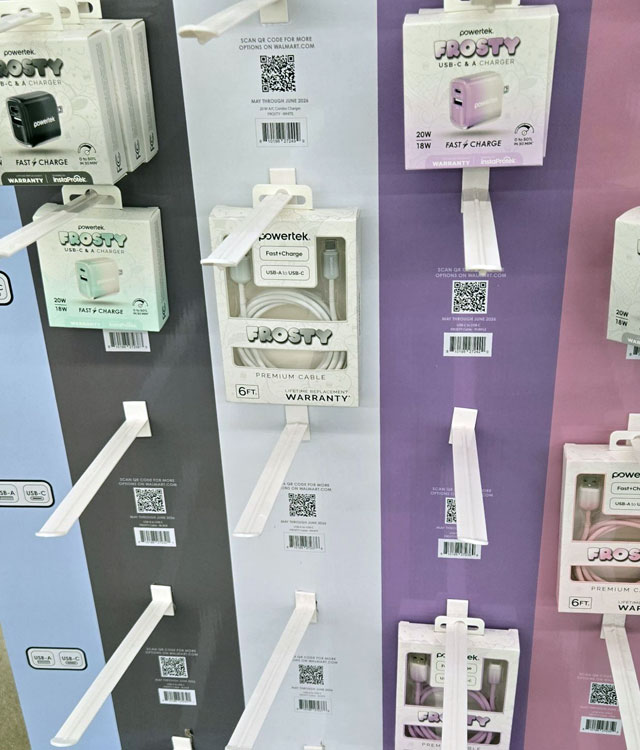
On this Walmart fixture, the empty space is still working.
Each peg location includes color blocking, product compatibility information, and a QR code that sends shoppers directly to Walmart.com when the item is out of stock.
Instead of a dead space, it becomes a bridge between the physical shelf and the endless aisle.
I think this matters for two reasons:
First, it protects the sale: If a shopper can’t find the cable, charger, or color they want, the QR code creates an immediate path to purchase rather than forcing them to search the app or leave without buying.
Second, it protects price impression. A fully stocked display always looks stronger than one with holes. When inventory fluctuates, graphics and digital touchpoints help maintain the appearance of assortment, selection, and value while still giving shoppers access to the broader Walmart.com catalog.
As retailers continue investing in omnichannel experiences, I think we’ll continue to see more displays designed this way.
• QR codes built directly into displays and fixtures.
• Signage that connects store inventory to online assortment.
• Endless aisle experiences that keep shoppers in the retailer ecosystem.
• Merchandising that continues working even when the inventory doesn’t
The best brands leverage their displays to not only sell what’s in stock. It allows them to sell what’s available across the entire retail network.
How are you seeing retailers and brands leverage this space? Who is doing it right? Do you think it matters?
Sources include:
Joshua Linden
Be the first to comment